
HDMI Technology Integration and Installations are Essential for Advanced Gaming
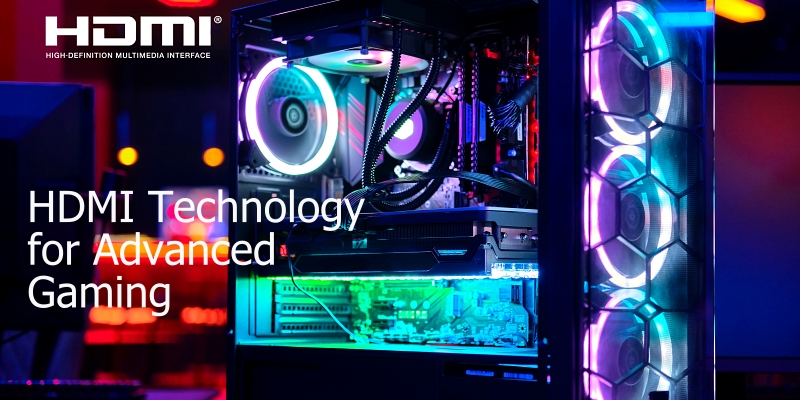
(published in Hiddenwires, May 2026)
In computer and video gaming, connectivity plays a defining role in shaping the overall experience. HDMI® technology has established itself as the gold standard for delivering both high-definition video and high-resolution audio through a single, streamlined connection. Its widespread adoption across gaming consoles, PCs, displays, and home entertainment systems makes it the most versatile and reliable interface for gamers of all levels.
One of HDMI technology’s greatest strengths is its ability to transmit uncompressed audio and video signals. This ensures that gamers experience content exactly as it was intended—without degradation or compromise. Support for advanced audio formats such as Dolby Atmos™ enables cinematic, immersive soundscapes that bring game worlds to life.
On the visual side, HDMI technology supports resolutions up to 4K, 8K and even 16K, along with vibrant color depth and clarity. Whether navigating expansive open worlds or competing in fast-paced multiplayer environments, HDMI technology ensures crisp visuals and smooth rendering with support for high bit rate color, dynamic HDR, and super-fast refresh rates. This high performance, combined with broad compatibility across devices, reinforces HDMI technology as the essential backbone of modern gaming systems.
Advanced HDMI Gaming Features
Beyond its core capabilities, HDMI technology continues to drive gaming experiences with features specifically designed to enhance gaming performance. Features such as Variable Refresh Rate (VRR) and Auto Low Latency Mode (ALLM) directly address the needs of today’s gamers by improving responsiveness and visual fluidity.
VRR dynamically synchronizes the display’s refresh rate with the game’s frame rate. This eliminates screen tearing and stuttering, resulting in smoother gameplay—especially critical during high-speed action sequences or competitive play. Meanwhile, ALLM automatically switches compatible displays into low-latency game mode, reducing input lag and ensuring that player actions are reflected on-screen as quickly as possible.
Another important advancement is Quick Frame Transport (QFT), which reduces display latency by transmitting frames at a higher rate. This minimizes the delay between a command input—such as pressing a controller button—and the corresponding on-screen action. Lower latency translates directly into more responsive gameplay, giving players a competitive edge and a more immersive experience overall.
Together, these features demonstrate how HDMI technology enables a performance-enhancing immersive experience tailored to the demands of modern gaming.
Portable Consoles and Big-Screen Connectivity
Portable gaming consoles have surged in popularity, offering powerful, console-quality experiences in compact, handheld formats. However, their capabilities extend far beyond on-the-go entertainment. HDMI technology enables these devices to seamlessly transition into full home entertainment systems by connecting directly to HDTVs.
With a simple HDMI cable connection, portable consoles can deliver high-definition visuals and immersive audio on large screens. This transforms personal gaming into a shared experience, ideal for social gatherings, family play, or competitive tournaments. The ability to scale from handheld to big-screen gaming adds significant versatility to these devices.
Modern systems make this transition effortless. Many portable consoles include docking stations that provide HDMI outputs, allowing users to connect to an HDTV in seconds. Others support third-party docking solutions or adapters, offering flexibility across a wide range of devices. Some consoles even feature built-in HDMI ports for direct connection, eliminating the need for additional accessories.
This plug-and-play simplicity highlights how HDMI technology has revolutionized portable gaming. What was once limited to small screens can now be enjoyed in full cinematic scale, with enhanced visuals and audio that elevate the entire experience.
Maximizing Performance with Certified HDMI® Cables
To fully realize the benefits of HDMI technology, using the right cable is essential. For today’s high-performance gaming systems, a certified Ultra High Speed HDMI® Cable is needed. These cables support bandwidths up to 48Gbps, enabling advanced features such as higher resolutions, faster refresh rates, and uncompressed audio formats.
Consumers should look for the official certification label on packaging to ensure authenticity and performance compliance. Certified cables undergo rigorous testing to guarantee they meet HDMI specifications, delivering reliable and consistent results.
Looking ahead, the next generation of connectivity is already on the horizon. The upcoming Ultra96 HDMI® Cable from the current HDMI 2.2 specification will be available the last half of 2026 and will support up to 96Gbps bandwidth, providing even greater capacity for future gaming innovations. This ensures compatibility with emerging technologies and prepares gamers for the next wave of ultra-high-resolution, high-frame-rate content. By choosing certified HDMI cables, gamers can be confident that both visuals and sound are delivered exactly as intended—unlocking the full potential of their gaming systems.
HDMI technology continues to define and elevate the gaming experience, from core connectivity to cutting-edge performance features and future-ready innovations. More info hdmi.org
The terms HDMI, HDMI High-Definition Multimedia Interface, HDMI Trade Dress and the HDMI Logos are trademarks or registered trademarks of HDMI Licensing Administrator, Inc. All other trademarks, registered trademarks, or service marks are the property of their respective owners in the United States and/or other countries.
- Valerie Robbins
- May 28 2026